
One Platform for Operational Signals and Follow-Through
F2 Core brings dealership assets, alerts, tickets, vendors, approvals, documents, and dashboards into one action-oriented operating layer.
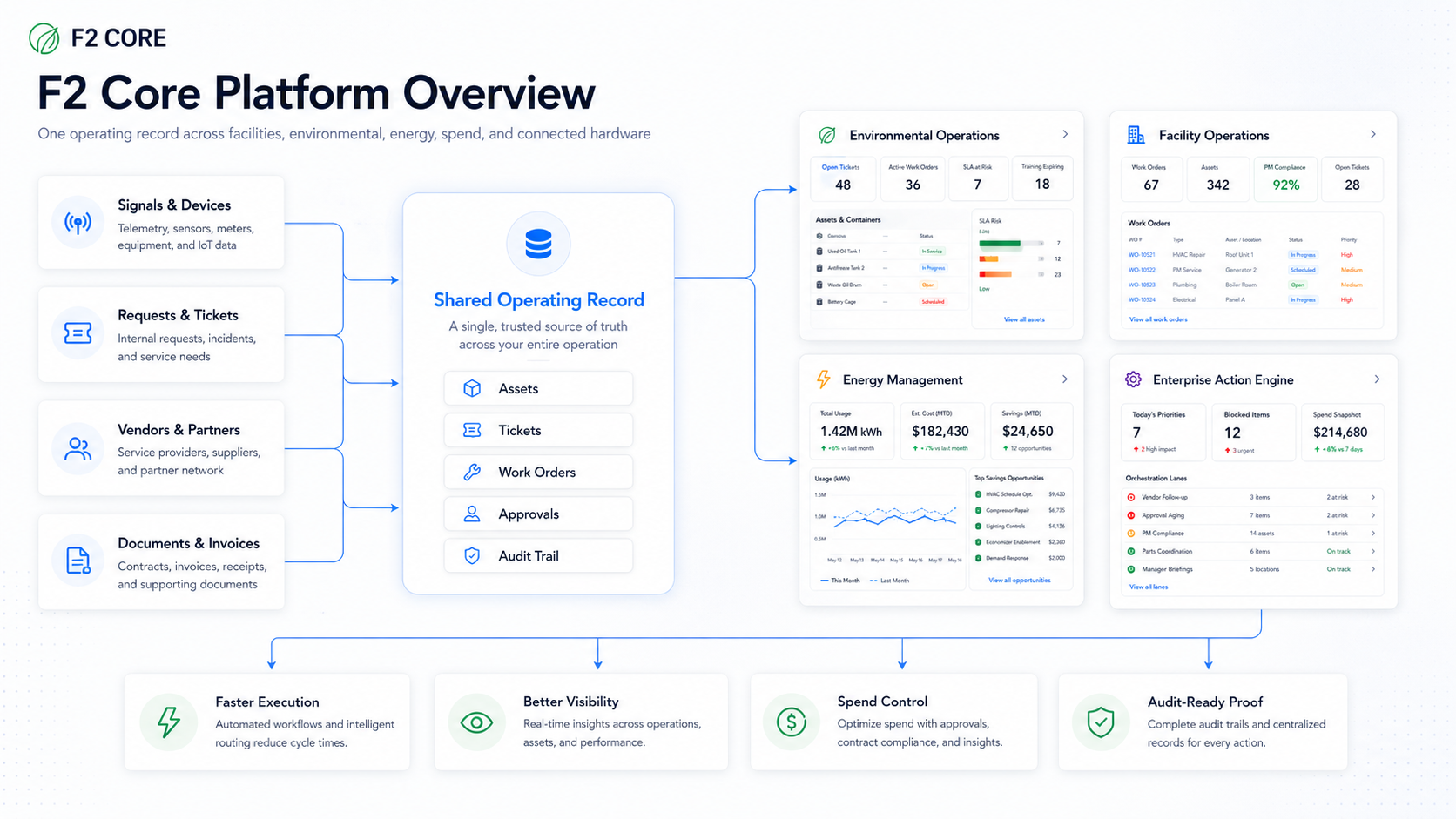
Site, asset, ticket, work-order objects
Workflow rules and assignments
Vendor and approval routing
Evidence, documents, reporting
The problem with disconnected work
Many dealership teams already have systems for accounting, maintenance, vendors, and compliance. The gap is the daily operational handoff between a signal and a completed action. F2 Core is the layer that captures the signal, creates the work, routes the decision, and stores the result. Roles and briefings sit on top. Workflow orchestration moves work. Everything resolves to one shared operating record.
What the platform connects
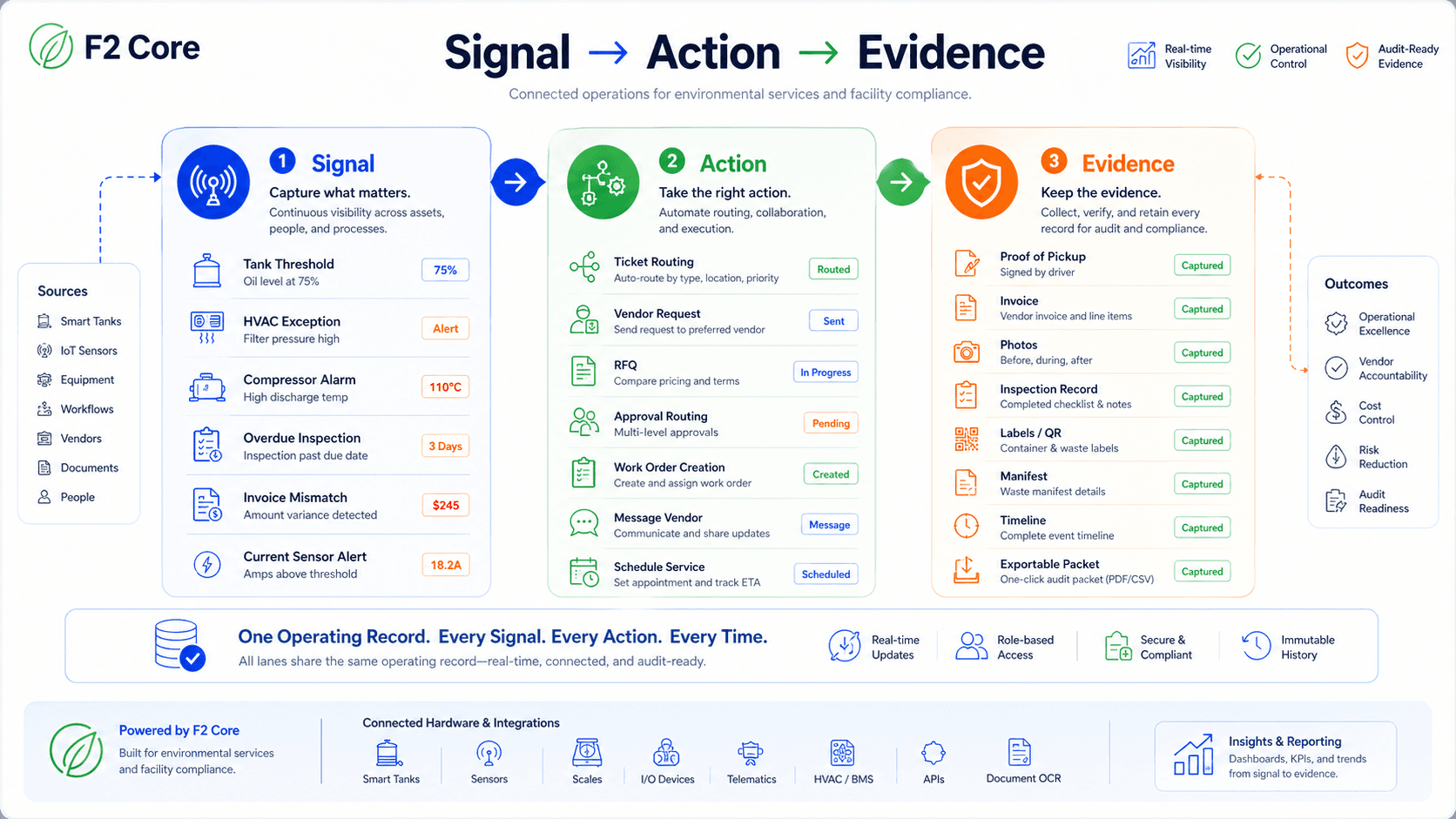
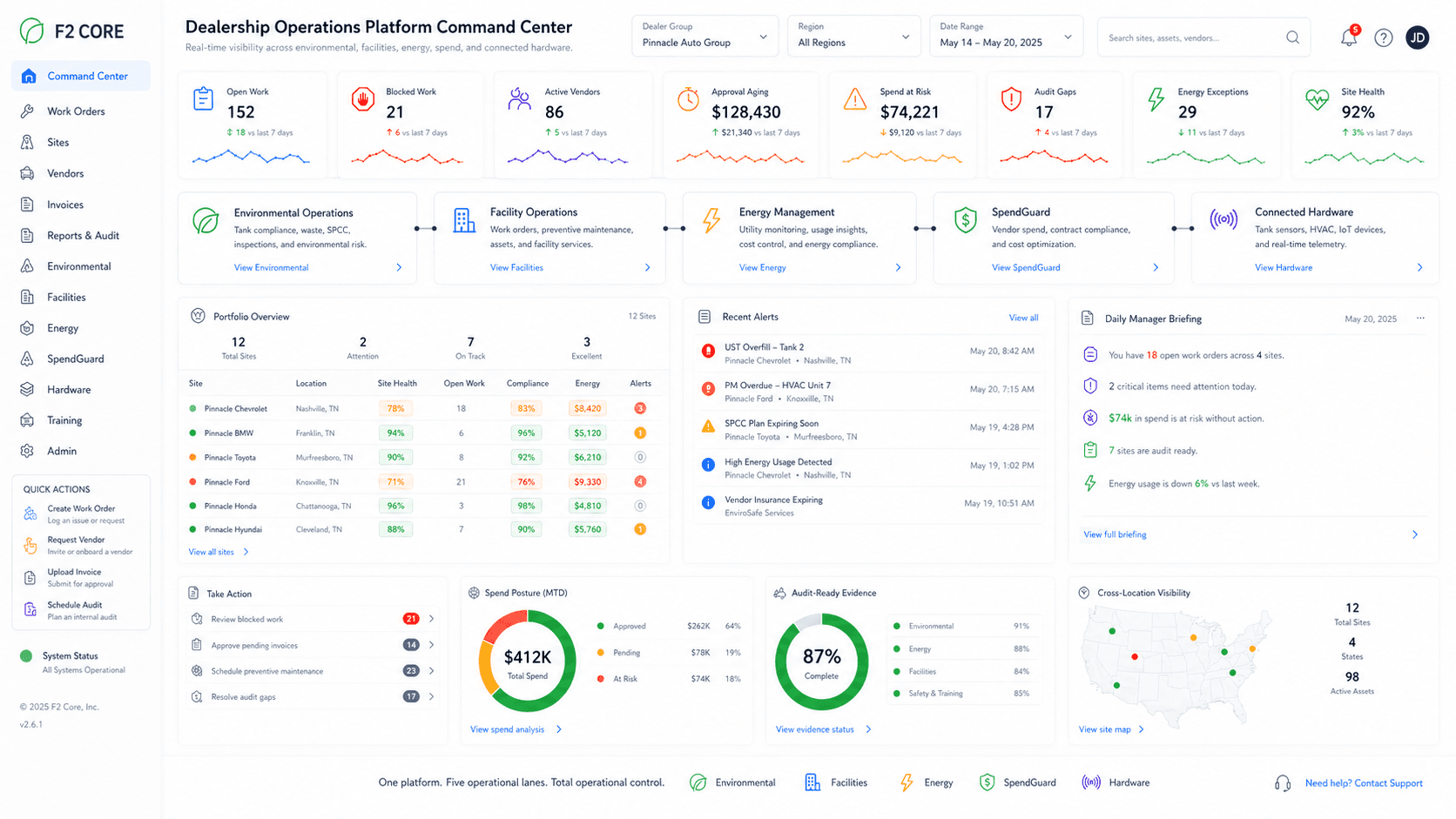
The platform pages show the core objects that power every lane. Environmental and Energy Management become stronger because they use the same operating model. SpendGuard attaches as a separate module.
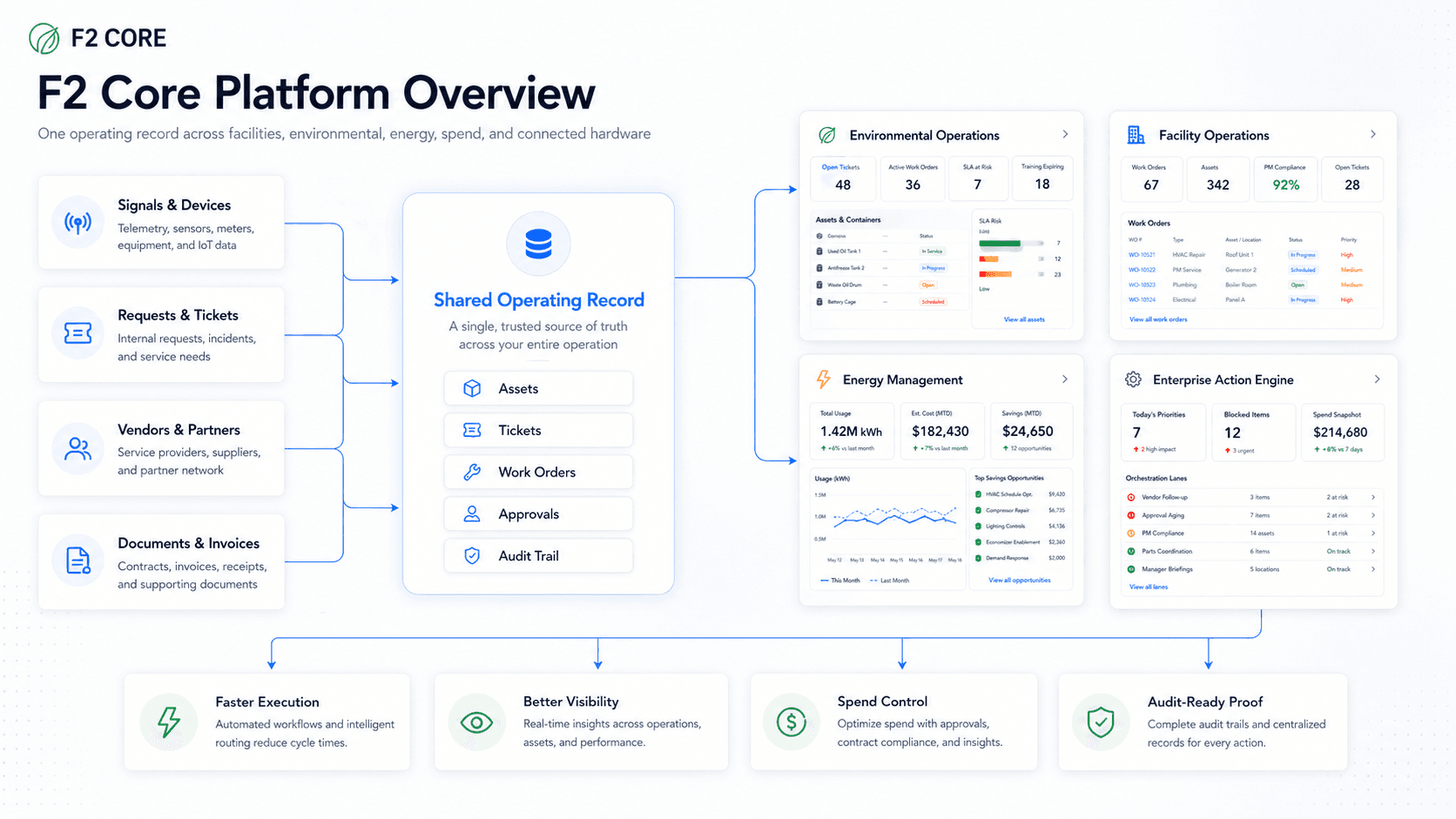
Dashboard
Role-based status across open work, asset health, vendor activity, cost posture, and exception queues.
Workflows
Trigger → ticket → vendor → approval → evidence. Multi-step workflows with rules, escalation, and human oversight.
Assets
Equipment, tanks, sensors, and service records — the asset is the operating context for every lane.
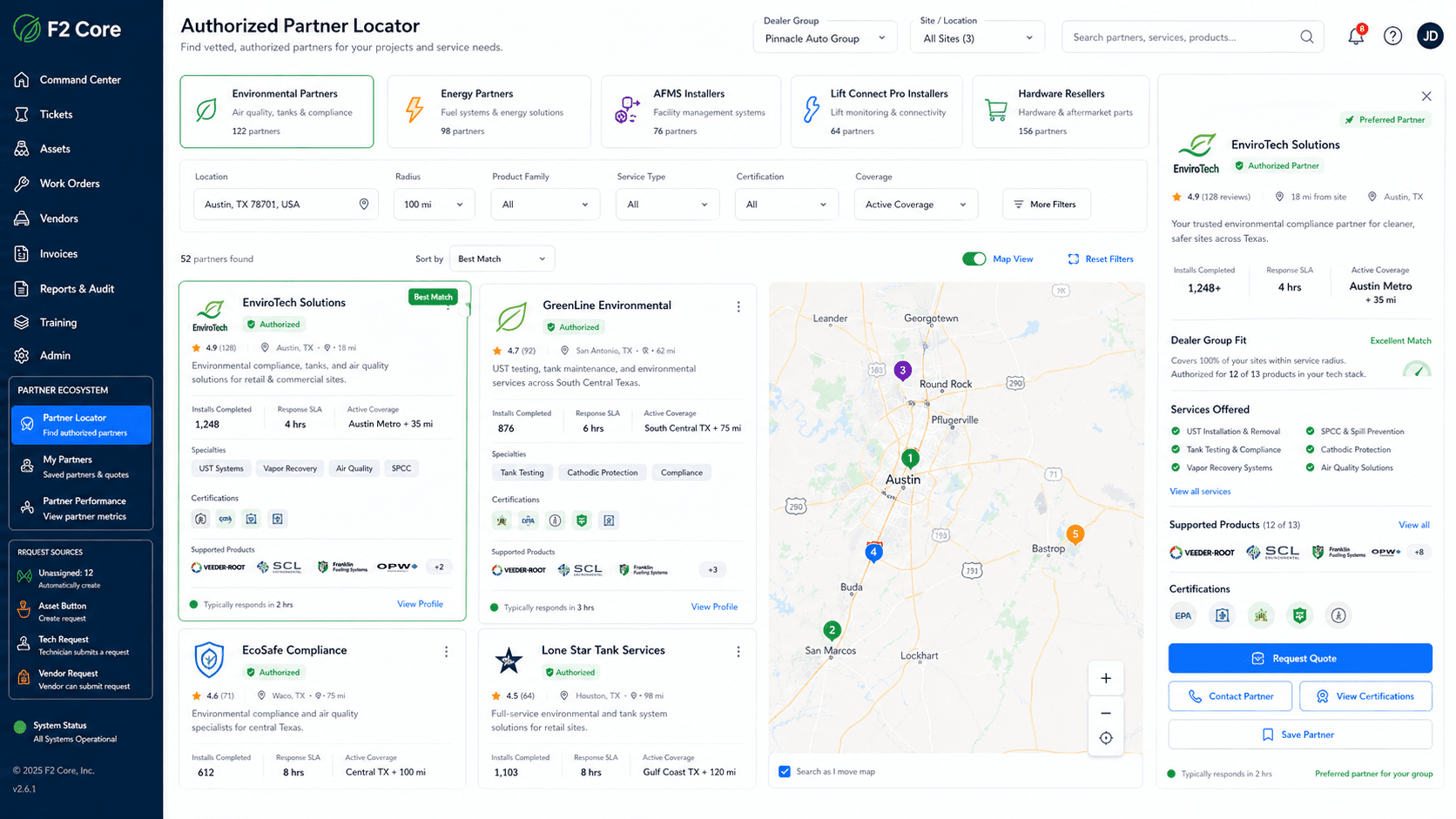
Vendor management
Default and alternate vendors, contracts, RFQs, schedules, documents, and performance — across lanes.
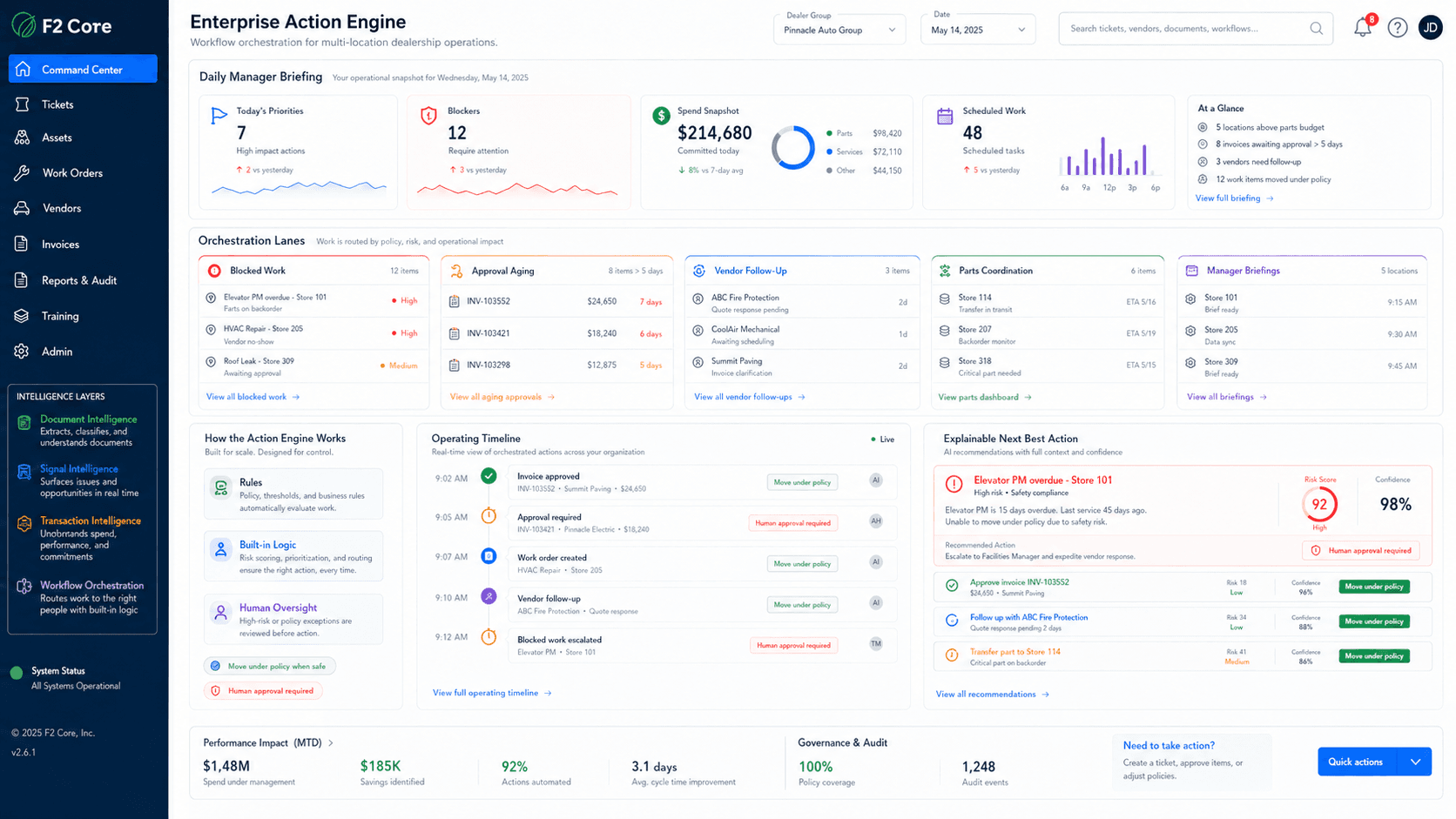
Approvals
Quote, contract override, invoice exception, and emergency-work approvals tied to the work itself.
Reporting
Portfolio summaries, exception queues, environmental gaps, energy runtime trends — built for decisions.
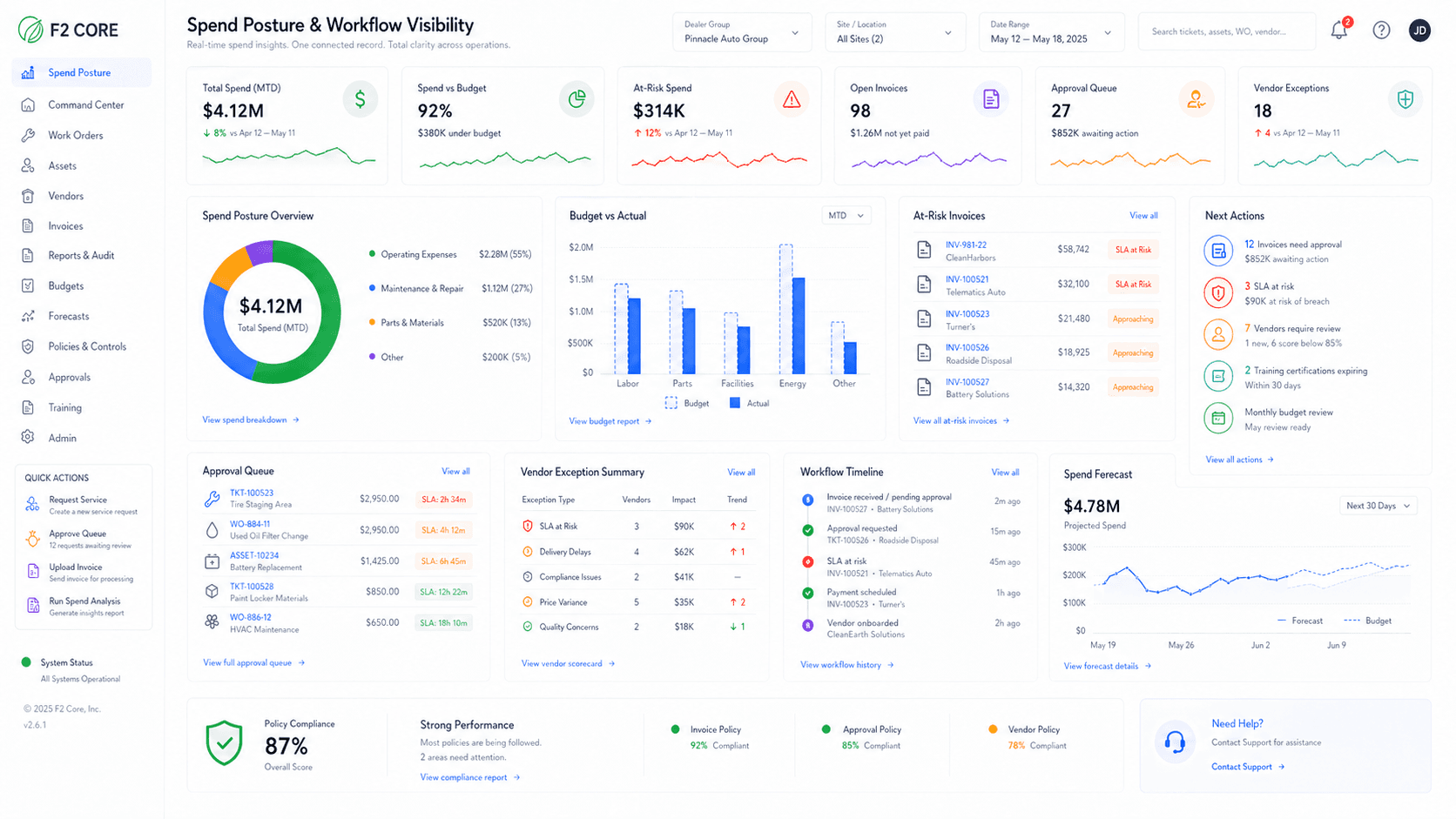
SpendGuard
Spend-specific matching, evidence, and savings opportunities. Attaches as a separate module.
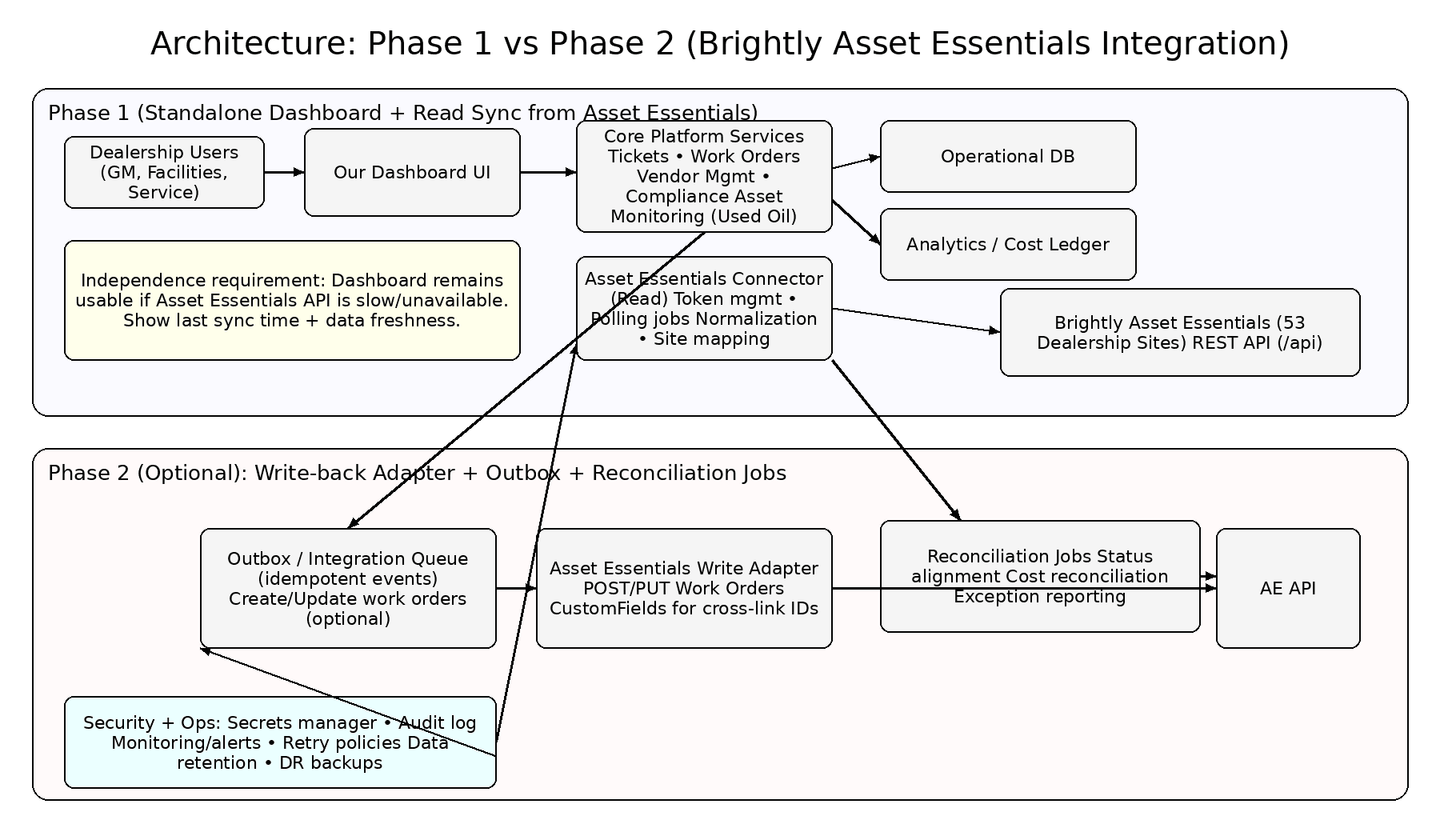
Designed to coexist with the systems you already run.
F2 Core is not a replacement for every customer system. Position it as the operational layer that can start standalone and integrate later when the customer is ready.
Standalone workflows first. Integration-ready architecture second. Clear source-of-truth boundaries throughout — operational data lives in F2 Core, financial and maintenance documents can stay in the systems that already host them.
Powered by document, signal, and transaction intelligence.
Standalone workflows first
Integration-ready architecture
Source-of-truth clarity
Phased rollout by lane
Every role sees what matters.
Portfolio status, spend, vendor risk, approval aging.
See status, spend, risk, and approvals across every location without manual roll-ups.
Portfolio-wide visibility
Hot-spot detection across regions
Approval aging and exception queues
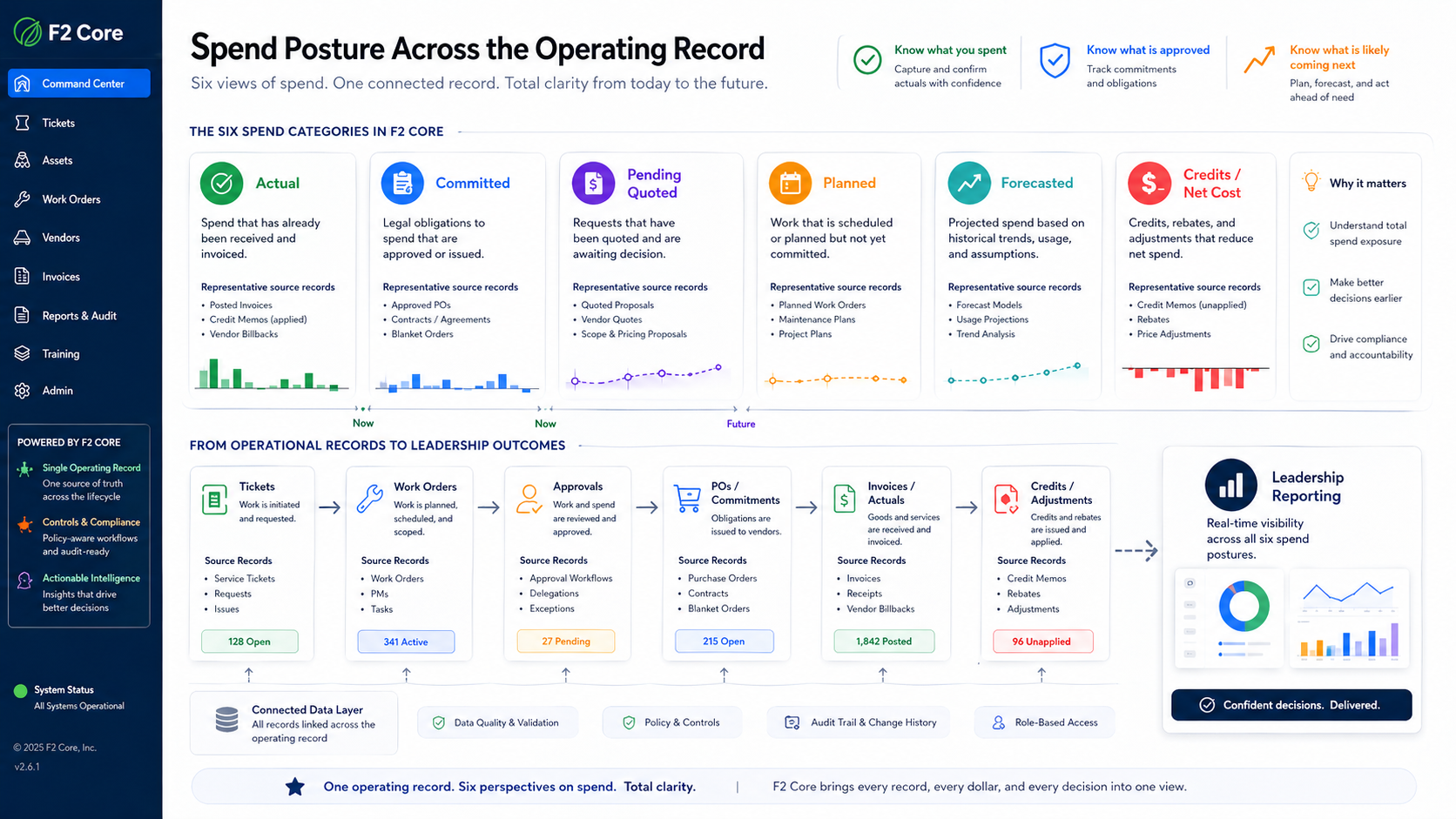
Financial control without replacing AP.
SpendGuard works inside the operating record. It surfaces invoice exceptions, approval queues, vendor exceptions, budget vs actual, and next actions — without replacing your accounting system. ERP / AP enrichment is available when ready.
Frequently asked questions
No. F2 Core is an operational layer that connects work, vendors, approvals, and evidence. It can start standalone and integrate with maintenance or ERP systems when ready.
Workflows use rules, thresholds, ownership, vendor contracts, approval limits, and escalation timers. The aim is fewer missed handoffs, not automation for its own sake.
Yes. Most groups start with the lane that hurts most — Environmental, Energy Management, or Facility Operations — and expand once the operating model is in place.
Ready to bring dealership operations into one workflow?
See the platform in an operating context — work, vendors, approvals, environmental workflows, and manager briefings using a multi-location dealership use case.